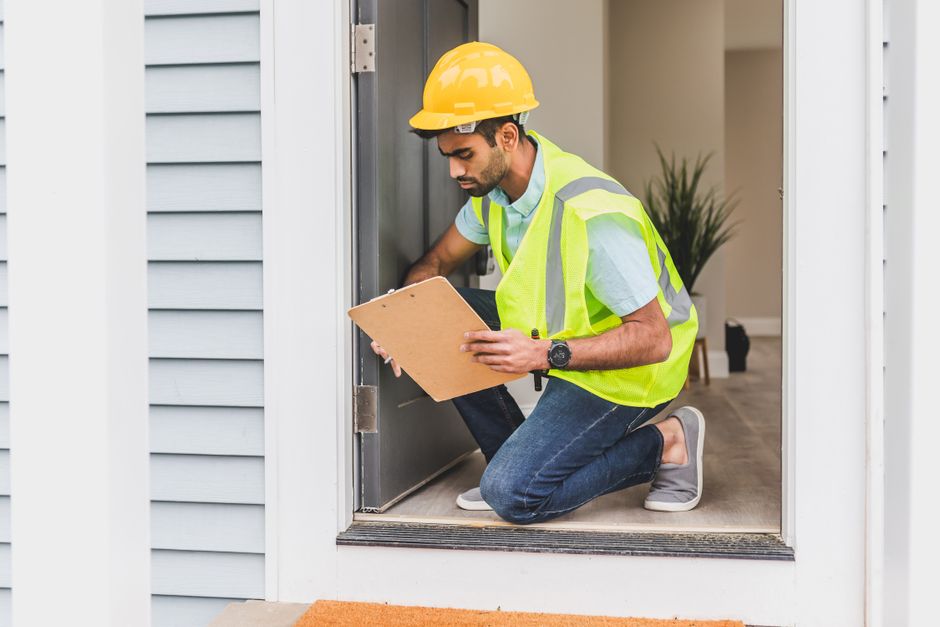
Report your landlord to code enforcement when your rental has serious problems the landlord refuses to fix. This guide walks you through the exact steps — what to document, how to file your complaint, and how to protect yourself from retaliation. In most cases, you can report your landlord to code enforcement for free.
The process creates an official paper trail that can pressure even stubborn landlords into making repairs. You do not need a lawyer to file a complaint, and every state has laws that protect tenants who speak up.
When and Why You Should Report Your Landlord to Code Enforcement
You should report your landlord to code enforcement when your home has health or safety problems. Common examples include mold, no heat or hot water, broken plumbing, pest infestations, exposed wiring, or a leaking roof. These are not cosmetic issues — they are code violations that your landlord is legally required to fix.
However, before you file a complaint, you should first ask your landlord in writing to make repairs. Send a dated letter or email describing the problem. Keep a copy. If the landlord ignores you or refuses to act, that written request becomes your proof that you tried. In most cases, inspectors will ask whether you notified your landlord first.
Filing a code enforcement complaint creates an official government record. As a result, your landlord can face daily fines until the problem is fixed. For example, in New York City, immediately hazardous violations carry fines of $500 to $2,000 — and $2,000 to $5,000 if left uncorrected. Heat and hot water violations cost landlords $250 per day. That kind of pressure works.
What to Include in Your Complaint (and What to Leave Out)
When you report your landlord to code enforcement, include these items: your name and address, a clear description of each problem, dated photos or video, and copies of any written repair requests you sent. Be specific. Instead of “the bathroom is bad,” write “the bathroom ceiling has black mold covering roughly two square feet, first noticed on [date].”
Leave out personal opinions about your landlord. Stick to facts — what is broken, when it started, and what you asked for. The inspector’s job is to check the building against the local housing code, not to settle personal disputes. A clear, factual complaint gets faster results.
After you report your landlord to code enforcement, anti-retaliation laws protect you. Your landlord cannot legally raise your rent, cut services, or try to evict you for filing a complaint. The strength of that protection varies by state. Here are the details for several major states:
| State | Anti-Retaliation Statute | Presumption Period | Penalty if Landlord Retaliates |
|---|---|---|---|
| California | Civil Code 1942.5 | 180 days | Up to $2,000 per violation + actual damages + attorney fees |
| New York | Real Property Law 223-b | 1 year | Defense to eviction + damages + attorney fees |
| Texas | Property Code 92.331 | 6 months | 1 month’s rent + $500 + actual damages + attorney fees |
| Massachusetts | MGL ch. 186, sec. 18 | 6 months | 1–3 months’ rent or actual damages (whichever is greater) + attorney fees |
| Illinois | 765 ILCS 721 | 1 year | 2 months’ rent or 2x actual damages (whichever is greater) + attorney fees |
The “presumption period” is key. For example, in New York, if your landlord tries to evict you within 1 year of your complaint, the court presumes it is retaliation. The landlord must prove otherwise. That is powerful protection.
Sample Template You Can Adapt
Below is a sample complaint letter you can use when you report your landlord to code enforcement. Adapt it to your state and situation.
Sample template — adapt to your state and your situation. This is an informational sample, not legal advice.
[Your Name]
[Your Address, Unit #]
[City, State, ZIP]
[Your Phone Number]
[Your Email Address]
[Date]
[Code Enforcement Office Name]
[Department of Buildings / Housing Inspection Division]
[City/County Government Address]
[City, State, ZIP]
Re: Housing Code Violation Complaint — [Your Address, Unit #]
Dear Code Enforcement Officer,
I am writing to report housing code violations at the above address. My landlord is [Landlord Name / Management Company], reachable at [Landlord Phone / Email / Address].
The following conditions exist in my unit and/or common areas:
1. [Describe problem #1 — e.g., “Black mold on bathroom ceiling, approximately 3 square feet, first noticed on [date].”]
2. [Describe problem #2 — e.g., “No hot water since [date]. Water heater has not been repaired despite written request.”]
3. [Describe problem #3 — e.g., “Cockroach infestation in kitchen, ongoing since [date].”]
I first notified my landlord in writing on [date of written repair request]. A copy of that request is attached. As of today, no repairs have been made.
I am requesting an inspection of my unit at your earliest convenience. I am available [days/times that work for you]. Dated photographs of the conditions are attached.
I understand that [State] law ([cite your state’s anti-retaliation statute — e.g., “California Civil Code 1942.5” or “New York Real Property Law 223-b”]) protects tenants from retaliation for filing code complaints.
📨 Get Free Tenant Rights Guides Alerts
Free · No spam · Unsubscribe anytime
Thank you for your attention to this matter.
Sincerely,
[Your Name]
Attachments:
— Copy of written repair request to landlord, dated [date]
— [Number] dated photographs of conditions
— [Any other supporting documents]
How to Send It So It Counts
Many cities let you report your landlord to code enforcement online, by phone, or in person. For example, New York City uses 311. Washington, D.C. uses its online Department of Buildings portal. Check your city or county website for the exact process. If you send a written complaint, use certified mail with return receipt so you have proof it was delivered.
Keep copies of everything. Save your complaint letter, photos, the landlord’s written repair request, and any response from the code enforcement office. This paper trail protects you if your landlord retaliates or if the situation ends up in court. Typically, the inspector will contact you to schedule a visit within a few business days.
If the inspector finds violations, they issue a citation to your landlord with a repair deadline. If the landlord misses that deadline, fines begin. The city may also schedule a re-inspection. In serious cases, the city can order emergency repairs at the landlord’s expense.
Frequently Asked Questions
Can I report my landlord to code enforcement anonymously?
Many cities allow anonymous complaints. However, anonymous reports may receive lower priority. The inspector still needs access to your unit, so full anonymity can be difficult. Your state’s anti-retaliation law protects you if you file under your name.
Will I get evicted if I report my landlord to code enforcement?
Every state except a small handful has anti-retaliation laws. For example, in Illinois under 765 ILCS 721, retaliation within 1 year is presumed illegal and can cost a landlord 2 months’ rent or double actual damages. If you face an eviction notice after filing a complaint, contact a local legal-aid office or tenant attorney immediately.
What if my landlord fixes the problem before the inspection?
That is actually a good outcome — the complaint worked. However, mention to the inspector that the repair was only made after you filed. If the problem returns, report your landlord to code enforcement again. Repeat violations often trigger higher fines and closer scrutiny from inspectors.
Can I withhold rent until my landlord makes repairs?
Some states allow rent withholding or repair-and-deduct remedies, but the rules are strict. For example, in California under Civil Code 1942, you may deduct up to 1 month’s rent for repairs, with a cap of two repairs per 12 months. In Washington under RCW 59.18.100, the limit is 2 months’ rent per year. In Texas, rent withholding is not expressly authorized. Check your state’s specific rules or consult a local legal-aid office before withholding rent.
Protect your stuff while you sort this out
A landlord’s insurance does not cover your belongings — renters insurance does, often for a few dollars a month. Compare options before your next move.
Find Your State’s Exact Rules
Notice periods, deposit caps, and the eviction timeline all change from state to state. Pick your state to see the exact days, dollar limits, and steps that apply where you live.
See Tenant Rights in All 50 States →
Sources & How to Verify
The rules on this page are drawn from official government and legal-aid sources. Tenant law changes, so always confirm the exact rule with your state’s statute or a local legal-aid office.
- HUD: hud.gov — federal renter protections and fair housing
- Legal Services Corporation: lsc.gov — find free legal aid in your state
- Cornell Legal Information Institute: law.cornell.edu/wex — plain-English legal definitions
- Your state statute & court self-help portal: search “[your state] landlord tenant act” and “[your state] court self-help eviction” for the exact law and forms
Content last reviewed June 2026. If you notice outdated information, please contact us.
Related Guides
- Tenant Rights by State (50-State Guide)
- More in This Category
- Tenant Scenarios — What to Do When…
- Notices, Letters & Documents
- Comparison Guides
- Tenant Rights Legal Glossary
Informational only — not legal advice. Tenant Rights Info is an independent educational resource, not a law firm, and this page does not provide legal advice. Landlord-tenant law varies by state and city and changes over time, so always verify the exact rule with your state’s statute, your local court’s self-help portal, or a legal-aid office. For urgent situations like an active eviction, contact a local legal-aid office or a licensed tenant attorney in your state right away.