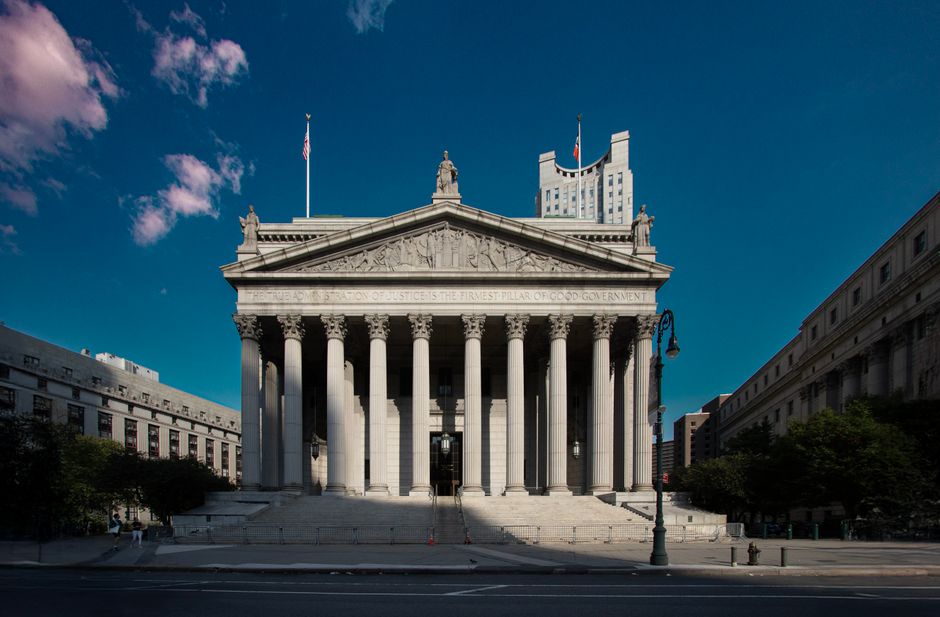
Suffolk county landlord tenant court is the Landlord-Tenant Part of the Suffolk County District Court (10th Judicial District), and it hears eviction cases from the western towns of Suffolk County. If you got eviction papers from the suffolk county landlord tenant court, the one date you must not miss is the court date printed on your notice of petition.
Suffolk County Landlord Tenant Court: Location, Hours, and Case Lookup
The suffolk county landlord tenant court is in the Cohalan Court Complex in Central Islip. The court’s official page lists all Suffolk County District Courts at that address. Bring a photo ID, and plan extra time for security screening at the door.
Starting August 3, 2026, landlord-tenant cases filed in the Suffolk District Courts are e-filed. As a result, most new papers can be viewed online through NYSCEF, the state e-filing system. You will need the index number from the top of your papers. However, if you cannot find your case online, call the clerk or go to the public window at the suffolk county landlord tenant court.
| Item | Detail |
|---|---|
| Address | Cohalan Court Complex, 400 Carleton Ave, Room D256, Central Islip, NY 11722 |
| Phone | 631-208-5775 (general information) |
| Public window hours | Monday–Friday, 9:15 a.m.–1:00 p.m. and 2:00 p.m.–5:00 p.m. (closed 1:00–2:00 p.m.) |
| Payments at the window | 9:15 a.m.–12:30 p.m. and 2:00 p.m.–4:00 p.m. |
| Calendar start | Usually 9:30 a.m. |
| Case lookup / e-filing | NYSCEF at nycourts.gov/efile (landlord-tenant cases are e-filed as of August 3, 2026). NYSCEF Resource Center: 646-386-3033 |
| Forms and court info | Suffolk District Landlord and Tenant Court page |
Hours can change on holidays. In most cases, it is smart to call ahead before you travel. You can also check the Suffolk County District Courts page for notices.
Your Deadlines After You Are Served
An eviction case starts when your landlord serves you with a notice of petition and a petition. The notice of petition tells you the date, time, and courtroom for your first appearance. Typically, that date is your most important deadline. Under RPAPL §733, the papers generally must be served at least 10 and no more than 17 days before the hearing. However, nonpayment cases follow a separate section, RPAPL §732.
The rules about when and how you must answer depend on the type of case. For example, a nonpayment case and a holdover case follow different sections of the law. Confirm your exact answer deadline with the clerk at the suffolk county landlord tenant court or with a legal-aid office. Do not guess.
A “default” means you did not show up or did not answer in time. If that happens, the judge can rule for the landlord without hearing your side. As a result, a warrant of eviction can follow. Many tenants in the suffolk county landlord tenant court lose cases only because they missed the first date.
What Happens on Your Court Date at Suffolk County Landlord Tenant Court
On your court date at the suffolk county landlord tenant court, check in with the court officer or clerk. Your case will be on the day’s calendar, which usually starts at 9:30 a.m. Wait until your name is called. Keep your phone quiet, and bring copies of every paper.
In many cases, you will talk with the landlord or their lawyer before seeing the judge. This is often where a settlement, called a stipulation, gets written. However, you do not have to sign anything you do not understand. You can ask the judge for time to get a lawyer. For example, you can say, “I would like an adjournment to speak with legal aid.”
If there is no deal, the judge may hold a hearing or trial. You can tell your side and show your proof. If the judge rules for the landlord, you may be able to ask for more time to move. The rules for stays and appeals have strict time limits. Ask the clerk at the suffolk county landlord tenant court about them the same day.
Free Help in This Courthouse
You do not have to face this alone. The New York courts run help resources for people without lawyers, and court staff can explain procedures. However, clerks cannot give legal advice. Ask at the suffolk county landlord tenant court public window where self-help is available that day.
Local legal-aid offices, such as Nassau Suffolk Law Services, may represent tenants for free. In most cases, you must qualify by income. Call as soon as you get papers, not the morning of court. If a legal-aid lawyer is working at the suffolk county landlord tenant court on your date, ask the court officer how to reach them.
New York courts provide free interpreters. Tell the clerk your language when you check in, or call ahead. Typically, the court will arrange one for your hearing. If you need a disability accommodation, ask the clerk early as well.
📨 Get Free Tenant Rights Guides Alerts
Free · No spam · Unsubscribe anytime
Frequently Asked Questions
Where is the suffolk county landlord tenant court?
It is at the Cohalan Court Complex, 400 Carleton Ave, Room D256, Central Islip, NY 11722. The general phone number is 631-208-5775. Call ahead to confirm your courtroom.
How do I look up my case online?
Starting August 3, 2026, landlord-tenant cases filed at the suffolk county landlord tenant court are e-filed on NYSCEF. Use the index number on your papers. For help, call the NYSCEF Resource Center at 646-386-3033.
What if I miss my court date?
The judge may enter a default judgment against you. You may be able to ask the court to undo it, but act fast. Contact a legal-aid office or tenant attorney right away.
Protect your stuff while you sort this out
A landlord’s insurance does not cover your belongings — renters insurance does, often for a few dollars a month. Compare options before your next move.
Find Your State’s Exact Rules
Notice periods, deposit caps, and the eviction timeline all change from state to state. Pick your state to see the exact days, dollar limits, and steps that apply where you live.
See Tenant Rights in All 50 States →
Sources & How to Verify
The rules on this page are drawn from official government and legal-aid sources. Tenant law changes, so always confirm the exact rule with your state’s statute or a local legal-aid office.
- HUD: hud.gov — federal renter protections and fair housing
- Legal Services Corporation: lsc.gov — find free legal aid in your state
- Cornell Legal Information Institute: law.cornell.edu/wex — plain-English legal definitions
- Your state statute & court self-help portal: search “[your state] landlord tenant act” and “[your state] court self-help eviction” for the exact law and forms
Content last reviewed September 2026. If you notice outdated information, please contact us.
New York Renter Guides
- New York Eviction Process
- New York Tenant Rights
- New York Security Deposit Law
- New York Rent Increase Laws
- New York Repairs and Habitability
- Breaking a Lease in New York
Related Guides
- Tenant Rights by State (50-State Guide)
- More in This Category
- Tenant Scenarios — What to Do When…
- Notices, Letters & Documents
- Comparison Guides
- Tenant Rights Legal Glossary
Informational only — not legal advice. Tenant Rights Info is an independent educational resource, not a law firm, and this page does not provide legal advice. Landlord-tenant law varies by state and city and changes over time, so always verify the exact rule with your state’s statute, your local court’s self-help portal, or a legal-aid office. For urgent situations like an active eviction, contact a local legal-aid office or a licensed tenant attorney in your state right away.