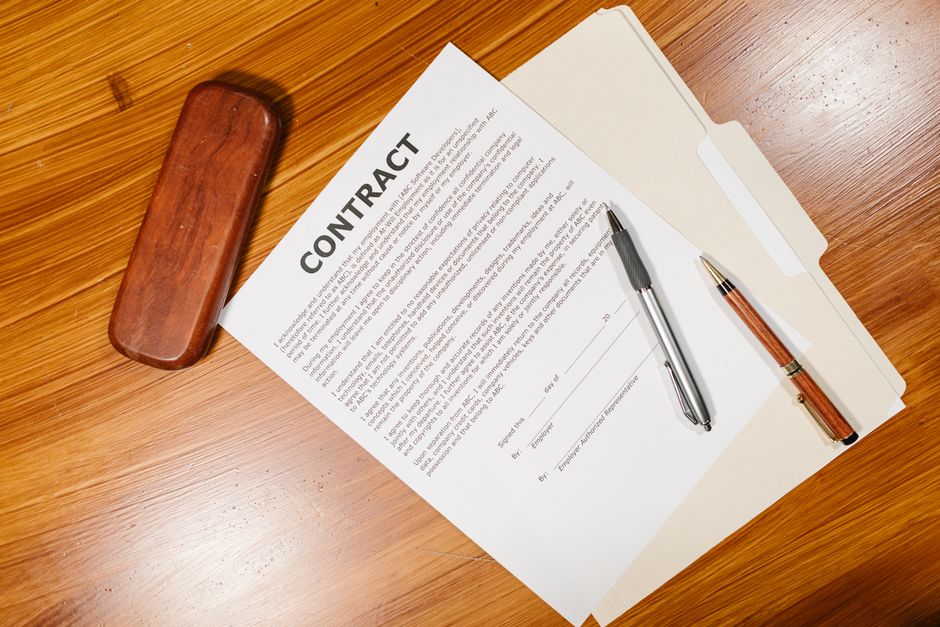
An order to show cause form california tenants look for is usually part of an emergency court request. The court signs an order to show cause (OSC). It orders the other side to come to a hearing and explain why the judge should not grant your request. For example, if your landlord changed the locks or cut off your water, you can ask a judge to act fast. There is no single statewide order to show cause form california tenants can file for this. Instead, you use a packet from your local court.
When and Why to Use an Order to Show Cause Form California
Most tenants never need this document. However, it matters a lot when your landlord takes the law into their own hands. Typically, tenants use an order to show cause form california packet for three things. The first is an illegal lockout. The second is a utility shutoff. The third is when a landlord takes your belongings to force you out. Under California Civil Code section 789.3, all three are illegal.
Here is how it works. You first ask for a TRO, which is a short-term order. The judge may sign it the same day. The order to show cause then sets a later hearing. At that hearing, the judge decides whether to make the order longer. That longer order is called a preliminary injunction. The Cornell Legal Information Institute explains the term in plain English.
Sometimes the court sends you an OSC instead. For example, you may get an order to show cause form california courts issue because a filing or hearing was missed. Read it right away. It tells you the date, time, and what the judge wants explained. If you get one during an active eviction, call a local legal-aid office the same day.
Lockout penalties vary by state. Here is what the law says in four states:
| State | Lockout / utility shutoff penalty | Law |
|---|---|---|
| California | Up to $100 per day, at least $250 per violation | Civil Code 789.3 |
| Texas | Actual damages + one month’s rent + $1,000 | Property Code 92.0081 |
| Florida | Actual damages or 3 months’ rent, whichever is greater | Statutes 83.67 |
| New York | Civil penalty of $1,000 to $10,000 per violation | RPAPL 768 |
What to Include in Your Order to Show Cause Form California Packet
A complete order to show cause form california packet usually has four parts. First, a request or application that says what you want the judge to order. Second, a sworn declaration that explains the facts. You can use Judicial Council form MC-030 for this. Third, a proposed order with blank spaces for the judge to sign. Fourth, proof that you gave your landlord notice. If you can’t pay the filing fee, ask for a fee waiver on form FW-001.
Keep your declaration short and factual. List dates, times, and what you saw. For example, write “On March 3 at 6 p.m., my key no longer worked.” Attach photos, texts, and your rent receipts. However, leave out insults, guesses, and long stories about old fights. As a result, the judge can see the problem in two minutes. The California Courts Self-Help Guide has more help with local forms.
| California step | Exact deadline | Source |
|---|---|---|
| Notice to landlord before emergency hearing | By 10:00 a.m. the court day before | Cal. Rules of Court 3.1203 |
| OSC hearing after a TRO | Within 21 days (25 with good cause) | CCP 527(d) |
| Answer to an eviction lawsuit | 10 court days after service | CCP 1167 |
Sample Order to Show Cause Form California Template
Use this sample declaration as a starting point for your order to show cause form california packet. Always check whether your local court requires its own form first.
Sample template – adapt to your state and your situation. This is an informational sample, not legal advice.
[Your Name]
[Your Address]
[Phone / Email]
Self-represented
SUPERIOR COURT OF CALIFORNIA, COUNTY OF [County]
[Your Name], Petitioner, v. [Landlord Name], Respondent. Case No. [Case Number]
DECLARATION IN SUPPORT OF EX PARTE APPLICATION FOR TEMPORARY RESTRAINING ORDER AND ORDER TO SHOW CAUSE RE: PRELIMINARY INJUNCTION
I, [Your Name], declare:
1. I rent the unit at [Rental Address] from [Landlord Name]. My rent is $[Amount] per month. It is paid through [Date].
2. On [Date] at [Time], [Landlord Name] [changed the locks / shut off the water / removed my belongings]. I did not agree to this. No court ordered it.
3. As a result, [describe harm: I have no place to sleep, my children cannot bathe, my medicine is inside].
4. On [Date] at [Time], I gave notice of this hearing to [Landlord Name] by [phone / text / email]. [He/She/They] said: “[Response, if any].”
📨 Get Free Tenant Rights Guides Alerts
Free · No spam · Unsubscribe anytime
5. I ask the court to order [Landlord Name] to [restore my access / restore utilities / return my property] right away. I also ask the court to set a hearing on why a preliminary injunction should not be granted.
I declare under penalty of perjury under the laws of the State of California that the foregoing is true and correct.
Date: [Date] Signature: ____________________ [Your Name]
How to File and Serve Your Order to Show Cause Form California
First, call your landlord before you go to court. Tell them the date, time, and courtroom. Then write down exactly what you said and when. In most cases, the judge will ask how you gave notice. Your order to show cause form california packet should include a short note about that call.
Next, file your papers with the clerk and make three copies. Keep one, give one to the court, and serve one on your landlord. Typically, an adult who is not part of the case hands the papers to your landlord. That person then fills out proof of service form POS-020. As a result, you can prove the order to show cause form california papers were delivered. If you also mail a copy, use certified mail and keep the receipt.
Finally, go to the OSC hearing on time. Bring your copies, photos, and receipts. If you are facing an active eviction, contact a local legal-aid office through LawHelpCA.org right away.
Frequently Asked Questions
Is there one official order to show cause form california courts use for tenants?
No. For tenant emergencies, most courts use their own ex parte packets plus a proposed order. Ask your court clerk or self-help center which order to show cause form california packet they accept.
Can I use an OSC to stop an eviction?
Usually not. An OSC doesn’t replace your answer to an eviction lawsuit, and that answer is due in 10 court days. However, you may be able to ask for a stay or to set aside a default. Check with your court or a local legal-aid office.
What if the court sent me an order to show cause form california notice?
Read the date and reason right away. Go to the hearing or file what it asks for before that date. Missing it can lead to penalties or dismissal of your case.
Protect your stuff while you sort this out
A landlord’s insurance does not cover your belongings — renters insurance does, often for a few dollars a month. Compare options before your next move.
Find Your State’s Exact Rules
Notice periods, deposit caps, and the eviction timeline all change from state to state. Pick your state to see the exact days, dollar limits, and steps that apply where you live.
See Tenant Rights in All 50 States →
Sources & How to Verify
The rules on this page are drawn from official government and legal-aid sources. Tenant law changes, so always confirm the exact rule with your state’s statute or a local legal-aid office.
- HUD: hud.gov — federal renter protections and fair housing
- Legal Services Corporation: lsc.gov — find free legal aid in your state
- Cornell Legal Information Institute: law.cornell.edu/wex — plain-English legal definitions
- Your state statute & court self-help portal: search “[your state] landlord tenant act” and “[your state] court self-help eviction” for the exact law and forms
Content last reviewed September 2026. If you notice outdated information, please contact us.
California Renter Guides
- California Eviction Process
- California Tenant Rights
- California Security Deposit Law
- California Rent Increase Laws
- California Repairs and Habitability
- Breaking a Lease in California
Related Guides
- Tenant Rights by State (50-State Guide)
- More in This Category
- Tenant Scenarios — What to Do When…
- Notices, Letters & Documents
- Comparison Guides
- Tenant Rights Legal Glossary
Informational only — not legal advice. Tenant Rights Info is an independent educational resource, not a law firm, and this page does not provide legal advice. Landlord-tenant law varies by state and city and changes over time, so always verify the exact rule with your state’s statute, your local court’s self-help portal, or a legal-aid office. For urgent situations like an active eviction, contact a local legal-aid office or a licensed tenant attorney in your state right away.