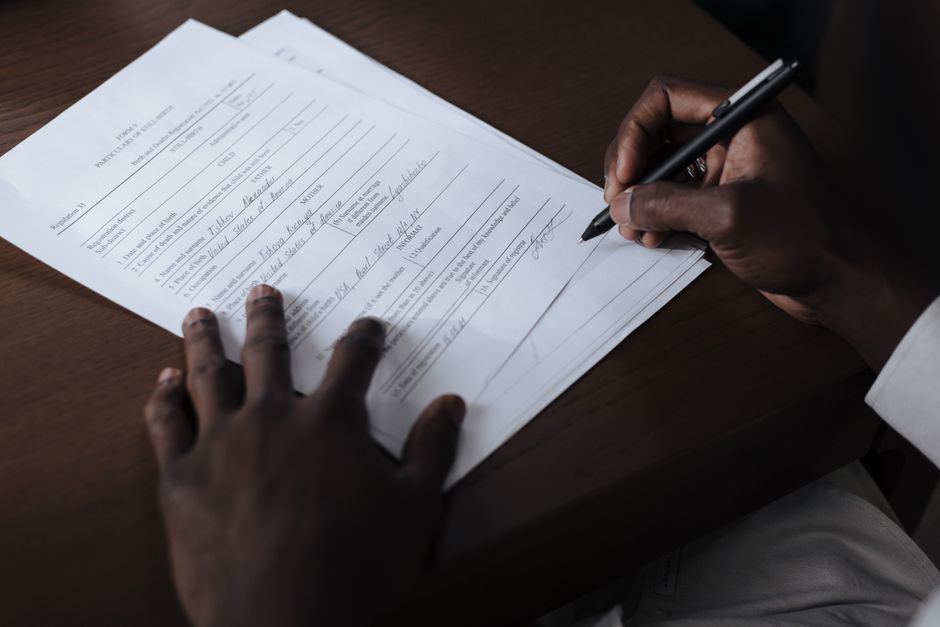
A sublease agreement new jersey tenants sign is a written deal between you (the original tenant) and a new person who will live in your unit for part of your lease. Put it in writing and get your landlord’s written consent first. A clear sublease agreement new jersey document protects your security deposit, your rental history, and your right to come back. Without one, you could still owe rent that the subtenant never paid.
When and Why to Use a Sublease Agreement New Jersey
You need a sublease agreement new jersey document any time someone else will live in your place while you stay on the lease. Common reasons include a summer job, a hospital stay, military service, or a temporary move for family. In most cases, you remain fully responsible to your landlord. As a result, if the subtenant skips rent or damages the unit, the landlord can come after you.
New Jersey has no general law that forces a landlord to approve a sublet. However, many leases say you need the landlord’s written consent. Subletting without it can count as a lease violation. Under the New Jersey Anti-Eviction Act (N.J.S.A. 2A:18-61.1), breaking a lease rule can be grounds for eviction after proper notice. That is why a signed sublease agreement new jersey form plus written landlord consent is your safest path.
A sublease is different from an assignment. In a sublease, you keep the lease and plan to return. In an assignment, you hand the whole lease over for good. Cornell’s Legal Information Institute explains the term “sublease” in plain English if you want a quick definition.
What to Include in a Sublease Agreement New Jersey (and What to Leave Out)
A strong sublease agreement new jersey form covers the basics clearly. Typically, you should include:
- Names of you, the subtenant, and the landlord
- The full unit address
- Exact start and end dates
- Monthly rent, due date, and how it gets paid
- Security deposit amount and return terms
- Who pays each utility
- A copy of your main lease attached, with a promise to follow it
- The landlord’s written consent, signed and dated
- A move-in checklist with photos
Leave out anything that breaks your main lease or the law. For example, don’t charge the subtenant a deposit larger than New Jersey allows. Under the New Jersey Security Deposit Act (N.J.S.A. 46:8-19 et seq.), a deposit can’t exceed 1.5 months’ rent. The same law says the deposit must be returned within 30 days after move-out, with an itemized list of any deductions. If you collect a deposit, your sublease agreement new jersey form should follow these rules too.
Deposit rules vary a lot by state. If your subtenant is coming from out of state, they may expect different rules. Here is how New Jersey compares:
| State | Max security deposit | Deadline to return deposit |
|---|---|---|
| New Jersey | 1.5 months’ rent | 30 days (5 days after fire, flood, or condemnation) |
| New York | 1 month’s rent | 14 days |
| Pennsylvania | 2 months’ rent (year 1), 1 month after | 30 days |
| Connecticut | 2 months’ rent (1 month if tenant is 62+) | 21 days |
| California | 1 month’s rent (most landlords) | 21 days |
Also check your local rules. Some New Jersey towns have rent control ordinances. In those towns, charging your subtenant more than your own rent could cause problems. Ask your municipal rent board if you’re not sure.
Sample Template You Can Adapt
This sample sublease agreement new jersey form covers the key terms most tenants need. Change it to fit your lease and your situation. Keep your sublease agreement new jersey paperwork simple, dated, and signed by everyone.
Sample template – adapt to your state and your situation. This is an informational sample, not legal advice.
SUBLEASE AGREEMENT
This Sublease Agreement is made on [Date] between [Your Name] (“Tenant”) and [Subtenant Name] (“Subtenant”).
1. Property. The unit is located at [Full Address, Unit #], [City], New Jersey [ZIP].
2. Main Lease. Tenant rents this unit from [Landlord Name] under a lease dated [Lease Date]. A copy is attached. Subtenant agrees to follow all rules in that lease.
3. Term. This sublease starts on [Start Date] and ends on [End Date]. It cannot run past the end of the main lease.
4. Rent. Subtenant will pay $[Amount] per month, due on the [Day] of each month. Payment will be made to [Tenant or Landlord] by [check / bank transfer / other].
5. Late Fee. If rent is more than [Number] days late, a fee of $[Amount] applies, as allowed by the main lease.
6. Security Deposit. Subtenant pays a deposit of $[Amount], not more than 1.5 months’ rent. Tenant will return it, minus itemized deductions, within [30] days after the sublease ends, as required by N.J.S.A. 46:8-21.1.
7. Utilities. Subtenant pays: [list]. Tenant pays: [list].
8. Condition. Both parties signed a move-in checklist with photos on [Date]. Subtenant will return the unit in the same condition, except normal wear and tear.
📨 Get Free Tenant Rights Guides Alerts
Free · No spam · Unsubscribe anytime
9. Landlord Consent. Landlord [Landlord Name] gave written consent on [Date]. A copy is attached.
10. Early Ending. If the main lease ends early for any reason, this sublease also ends. Tenant will give Subtenant written notice as soon as possible.
Tenant Signature: ______________ Date: ________
Subtenant Signature: ______________ Date: ________
Landlord Consent Signature: ______________ Date: ________
How to Send Your Sublease Agreement New Jersey Request So It Counts
Start with a written consent request to your landlord. Send it by certified mail with a return receipt. Also email a copy so there’s a time stamp. In most cases, include the subtenant’s name, the dates, and a copy of the draft sublease agreement new jersey form. Keep the green return card and the tracking number.
Don’t let the subtenant move in until you have written consent in hand. A text saying “sure” is better than nothing. However, a signed letter is much stronger if a dispute comes up later. As a result, attach the landlord’s consent to your final sublease agreement new jersey copy.
Give every signer a full copy. Store scans in the cloud. Keep rent receipts from your subtenant, too. If anything goes wrong, those records are your proof. If you get an eviction notice or court papers, contact Legal Services of New Jersey right away. You can also read the New Jersey Courts landlord-tenant self-help page.
Frequently Asked Questions
Do I need my landlord’s permission to sublet in New Jersey?
It depends on your lease. Many leases require written consent, and subletting without it can be treated as a lease violation. Even if your lease is silent, getting written consent attached to your sublease agreement new jersey form is the safest move.
Am I still responsible if my subtenant doesn’t pay?
Typically, yes. You stay on the main lease, so the landlord can hold you responsible for unpaid rent or damage. A clear sublease agreement new jersey document gives you written proof to recover money from the subtenant, often in small claims court.
Can my subtenant be evicted if my lease ends?
A sublease generally can’t last longer than your own lease. If your lease ends, the subtenant may have to leave too. New Jersey eviction rules are strict, so check with your court or a local legal-aid office before anyone is asked to move out.
Protect your stuff while you sort this out
A landlord’s insurance does not cover your belongings — renters insurance does, often for a few dollars a month. Compare options before your next move.
Find Your State’s Exact Rules
Notice periods, deposit caps, and the eviction timeline all change from state to state. Pick your state to see the exact days, dollar limits, and steps that apply where you live.
See Tenant Rights in All 50 States →
Sources & How to Verify
The rules on this page are drawn from official government and legal-aid sources. Tenant law changes, so always confirm the exact rule with your state’s statute or a local legal-aid office.
- HUD: hud.gov — federal renter protections and fair housing
- Legal Services Corporation: lsc.gov — find free legal aid in your state
- Cornell Legal Information Institute: law.cornell.edu/wex — plain-English legal definitions
- Your state statute & court self-help portal: search “[your state] landlord tenant act” and “[your state] court self-help eviction” for the exact law and forms
Content last reviewed September 2026. If you notice outdated information, please contact us.
New Jersey Renter Guides
- New Jersey Eviction Process
- New Jersey Tenant Rights
- New Jersey Security Deposit Law
- New Jersey Rent Increase Laws
- New Jersey Repairs and Habitability
- Breaking a Lease in New Jersey
Related Guides
- Tenant Rights by State (50-State Guide)
- More in This Category
- Tenant Scenarios — What to Do When…
- Notices, Letters & Documents
- Comparison Guides
- Tenant Rights Legal Glossary
Informational only — not legal advice. Tenant Rights Info is an independent educational resource, not a law firm, and this page does not provide legal advice. Landlord-tenant law varies by state and city and changes over time, so always verify the exact rule with your state’s statute, your local court’s self-help portal, or a legal-aid office. For urgent situations like an active eviction, contact a local legal-aid office or a licensed tenant attorney in your state right away.