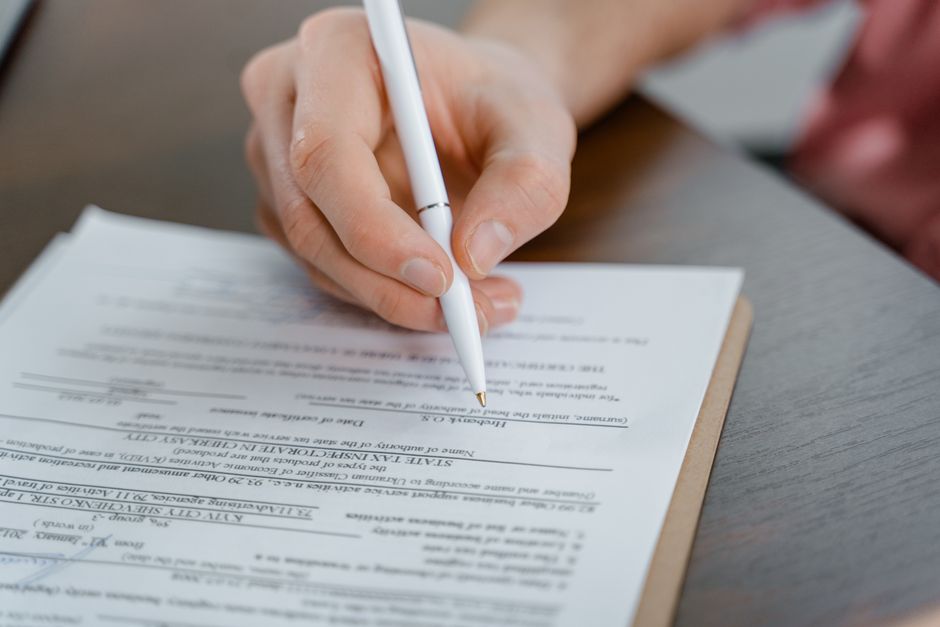
nj landlord tenant court forms are the papers a New Jersey tenant uses to take part in an eviction case. That can mean asking for more time, undoing a missed court date, or appealing a judge’s decision. Many tenants think they must file a stack of papers the day the summons arrives. In most cases, they don’t. Knowing which nj landlord tenant court forms you need, and which you can skip, protects your home and your time.
When and Why to Use NJ Landlord Tenant Court Forms
New Jersey eviction cases are heard in the Special Civil Part, Landlord/Tenant Section, of the Superior Court. The case starts when your landlord files a complaint and you get a summons. The summons lists your court date. Typically, the court holds a settlement conference first. If there’s no deal, the case goes to trial that day. You can find the official packets on the NJ Courts landlord-tenant self-help page.
You need nj landlord tenant court forms when something goes off track. For example, you missed court and got a default judgment. Or a warrant of removal was taped to your door. Or you lost at trial and think the judge got it wrong. In those moments, the right form asks the judge to pause, reopen the case, or review it.
The key is timing. Most nj landlord tenant court forms only help if you file them fast. As a result, waiting a week to “see what happens” can cost you your home.
What to Include in NJ Landlord Tenant Court Forms
Most nj landlord tenant court forms ask for the same basics. List your name, the landlord’s name, and the docket number printed on your summons. It starts with “LT.” Add your address and a phone number where the court can reach you. Then comes the most important part, which is a short, true statement of the facts. This is called a certification. You sign it under penalty of perjury.
Stick to facts you can prove. For example, write “I paid $1,200 on March 3 by money order,” then attach the receipt. Leave out insults, long backstories, and guesses about the landlord’s motives. However, do mention defenses like serious repair problems or a wrong rent amount. For legal terms, Cornell’s legal dictionary explains eviction in plain English.
New Jersey is unusual because it doesn’t require a written answer. Other states set strict filing deadlines. Here is how nj landlord tenant court forms and deadlines compare:
| State | Written answer required? | Deadline to respond | Notice before lockout |
|---|---|---|---|
| New Jersey | No | Appear on your court date | 3 business days after warrant is served |
| New York | Yes (nonpayment) | 10 days after service | 14-day marshal’s notice |
| California | Yes | 10 court days after service | 5 days after sheriff posts notice |
| Florida | Yes | 5 days, not counting weekends and legal holidays | 24 hours after writ is posted |
Sample Template You Can Adapt
Many nj landlord tenant court forms include a blank page for your certification. Below is a sample showing how to write one for an Order to Show Cause. Use it alongside the official nj landlord tenant court forms from the court, not instead of them.
Sample template – adapt to your state and your situation. This is an informational sample, not legal advice.
SUPERIOR COURT OF NEW JERSEY
LAW DIVISION, SPECIAL CIVIL PART
LANDLORD/TENANT SECTION, [County Name] COUNTY
[Landlord Name], Plaintiff,
v.
[Your Name], Defendant.
Docket No.: LT-[Docket Number]
CERTIFICATION OF TENANT IN SUPPORT OF ORDER TO SHOW CAUSE
I, [Your Name], certify as follows:
1. I am the tenant at [Your Full Address, Unit Number], New Jersey. I have lived there since [Move-In Date].
2. A [default judgment / warrant of removal] was entered against me on [Date].
3. I missed court on [Court Date] because [short, true reason, e.g., “I was admitted to the hospital,” with proof attached as Exhibit A].
4. I have a defense to this case: [e.g., “I paid all rent due” / “The unit has no heat, and I reported it in writing on [Date]”]. Proof is attached as Exhibit [B].
5. I ask the Court to [vacate the default judgment / stop the lockout / grant a hardship stay] and list the case for trial.
📨 Get Free Tenant Rights Guides Alerts
Free · No spam · Unsubscribe anytime
I certify that the foregoing statements made by me are true. I am aware that if any of the foregoing statements made by me are willfully false, I am subject to punishment.
Date: [Date]
Signature: ______________________
[Your Name]
[Phone Number] | [Email]
How to Send It So It Counts
Unlike a letter to your landlord, most nj landlord tenant court forms are filed with the court, not mailed. Bring or send them to the Landlord/Tenant office in the county where your case is filed. Many courts also accept filings through the Judiciary’s online system. Make three copies before you file: one for the court, one for the landlord or their lawyer, and one for you.
You must also give a copy to the other side. Typically, the judge’s signed order will say how and when to serve it. Use a method you can prove, like certified mail with a return receipt, or hand delivery with a signed receipt. Keep every stamped page and tracking number. If you can’t afford the filing fee, ask the clerk for a fee waiver form, which is one of the nj landlord tenant court forms many tenants overlook.
If a lockout is days away, don’t handle it alone. Call Legal Services of New Jersey at 1-888-576-5529. They can check your forms before you file.
FAQ About NJ Landlord Tenant Court Forms
Do I have to file an answer to my New Jersey eviction complaint?
In most cases, no. New Jersey doesn’t require a written answer in a summary eviction case. Instead, show up on your court date with your receipts, photos, and texts. You’ll only need nj landlord tenant court forms if you miss court or need more time.
What form do I use if I missed my court date?
You typically file an Order to Show Cause asking the judge to vacate the default judgment. Include a certification explaining why you missed court and what your defense is. Among all nj landlord tenant court forms, this one is the most time-sensitive, so file it right away.
Can I get more time to move out?
You may be able to. New Jersey law lets a judge grant a hardship stay in some residential cases, usually only if you pay all rent due. A judge may also give you a few extra days to move out. Check with your court or a local legal-aid office about which request fits your case.
Protect your stuff while you sort this out
A landlord’s insurance does not cover your belongings — renters insurance does, often for a few dollars a month. Compare options before your next move.
Find Your State’s Exact Rules
Notice periods, deposit caps, and the eviction timeline all change from state to state. Pick your state to see the exact days, dollar limits, and steps that apply where you live.
See Tenant Rights in All 50 States →
Sources & How to Verify
The rules on this page are drawn from official government and legal-aid sources. Tenant law changes, so always confirm the exact rule with your state’s statute or a local legal-aid office.
- HUD: hud.gov — federal renter protections and fair housing
- Legal Services Corporation: lsc.gov — find free legal aid in your state
- Cornell Legal Information Institute: law.cornell.edu/wex — plain-English legal definitions
- Your state statute & court self-help portal: search “[your state] landlord tenant act” and “[your state] court self-help eviction” for the exact law and forms
Content last reviewed September 2026. If you notice outdated information, please contact us.
New Jersey Renter Guides
- New Jersey Eviction Process
- New Jersey Tenant Rights
- New Jersey Security Deposit Law
- New Jersey Rent Increase Laws
- New Jersey Repairs and Habitability
- Breaking a Lease in New Jersey
Related Guides
- Tenant Rights by State (50-State Guide)
- More in This Category
- Tenant Scenarios — What to Do When…
- Notices, Letters & Documents
- Comparison Guides
- Tenant Rights Legal Glossary
Informational only — not legal advice. Tenant Rights Info is an independent educational resource, not a law firm, and this page does not provide legal advice. Landlord-tenant law varies by state and city and changes over time, so always verify the exact rule with your state’s statute, your local court’s self-help portal, or a legal-aid office. For urgent situations like an active eviction, contact a local legal-aid office or a licensed tenant attorney in your state right away.